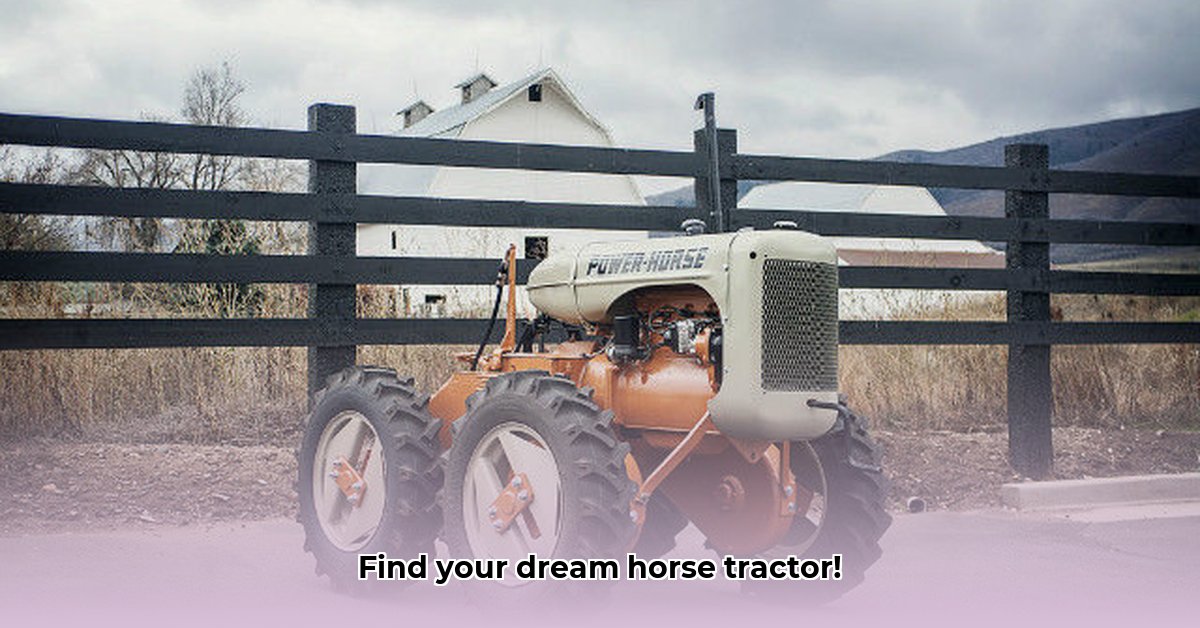
Choosing the right tractor is a pivotal decision for any farmer. This comprehensive guide focuses on 40-99 horsepower tractors, a popular range offering a balance of power and versatility for various farming operations. We'll explore the technical aspects, market trends, and provide a step-by-step buying guide to help you find your ideal workhorse – without getting lost in the technical jargon. For smaller farms, consider options like the Mahindra tractors.
Sarah's Story: A Real-Life Tractor Tale
Sarah, a dedicated farmer, faced a common challenge: upgrading her aging tractor. Her old machine was struggling to keep up with the demands of her growing operation, highlighting the need for a reliable 40-99 HP tractor. She needed a balance of power, efficiency, and affordability. Her experience underscores the complex decision-making process involved in selecting the right tractor, going beyond horsepower, and considering the specific needs and budget of the farm.
Matching Your Needs to the Right Tractor
Before diving into technical specifications, assess your farm's requirements. What are your primary tasks? Are you primarily focused on tillage, hay production, or livestock management? Understanding your operation's demands helps determine the ideal horsepower, transmission type, and essential implements. Consider your budget – are you aiming for a new tractor or a cost-effective used model? How will you finance the purchase? A realistic assessment of your needs and financial capabilities will significantly narrow the range of potential tractors.
Decoding the Tractor Specs: Power, Performance, and Peace of Mind
Let's demystify the technicalities. The 40-99 HP range offers a sweet spot for various farming operations, balancing power with maneuverability.
The Engine's Heart
Most modern 40-99 HP tractors feature Tier 4-compliant engines (engines meeting strict environmental emission standards). While these engines contribute to cleaner emissions, they may require more frequent maintenance compared to older models. However, many farmers find the added maintenance a worthwhile trade-off for the sake of environmental responsibility.
Smooth Sailing with Transmissions
Two main transmission types dominate this horsepower range: hydrostatic and manual. Hydrostatic transmissions (transmissions that use hydraulic fluid to transmit power) offer smooth, precise control, ideal for intricate maneuvers, but may come at a higher price and more complex maintenance. Manual transmissions are often simpler, more affordable, and require less maintenance, but demand more operator skill.
Safety First
Prioritize safety features like Roll-Over Protection Structures (ROPS) and seatbelts. These safety features are non-negotiable and critical to protecting the operator from potential accidents. Are there any additional safety features that your operation would benefit from?
Cab Comfort
Long hours in the tractor's cab necessitate a comfortable and functional workspace. Consider features like air conditioning, comfortable seating, optimal visibility, and noise reduction. A comfortable cab directly impacts productivity and the operator's well-being.
Exploring the Market: Brands, Prices, and Finding Your Tractor
The 40-99 HP tractor market offers a wide selection of reputable brands. Established manufacturers like Case IH, Massey Ferguson, and New Holland are known for their reliability and performance, while other brands, including TYM and Solis, offer competitive options at various price points.
New tractors generally command a higher price but provide the benefit of a full warranty and the latest technology, whereas used tractors can significantly reduce the initial investment. However, potential maintenance costs and condition assessments are critical considerations when buying a used machine. Online marketplaces and auctions can be valuable resources for finding used tractors.
Your Tractor-Buying Roadmap: A Step-by-Step Guide
Purchasing a tractor is a significant financial commitment. Follow these steps for a smooth and informed decision:
Define Your Needs and Budget: Create a detailed budget encompassing purchase price, insurance, maintenance, fuel costs, and potential repairs. This process clarifies your financial constraints and helps narrow down suitable models.
Research and Compare: Research tractor models, focusing on specifications, features, reviews, and comparisons. Create a shortlist of models matching your requirements and budget.
Visit Dealerships and Test Drive: Visit local dealerships to examine tractors on your shortlist. Test-driving is essential; time spent in the cab offers invaluable insights into the tractor’s ergonomics and operation. Ask detailed questions about specifications, maintenance, financing, and warranties.
Negotiate and Finalize the Purchase: Negotiate the price, financing terms, and additional features. Obtain all agreements in writing before signing any contracts.
Understand Maintenance and Warranties: Inquire about maintenance schedules, warranty durations, and availability of local service and parts.
Pros and Cons of Common Tractor Features
| Feature | Pros | Cons |
|---|---|---|
| Hydrostatic Transmission | Smooth operation, precise control, easier maneuverability, less operator fatigue | Higher cost, potentially complex maintenance, might be less fuel-efficient |
| Manual Transmission | Simpler, more affordable, potentially more fuel-efficient | Requires more operator skill, less smooth operation, can be more tiring |
| Tier 4 Engine | Cleaner emissions, environmentally compliant | Potentially higher maintenance costs, may require specialized fuel |
| Cab with AC | Enhanced operator comfort, improved productivity in various climates | Higher initial cost |
Conclusion: Finding Your Perfect Workhorse
Choosing a 40-99 HP tractor demands careful consideration of your farm's needs, budget, and long-term goals. Thorough research, thoughtful planning, and diligent comparison shopping will ensure the selection of a reliable and efficient tractor that will successfully support your farming operation for many years to come. Remember, the right tractor is an investment in your farm's future.